
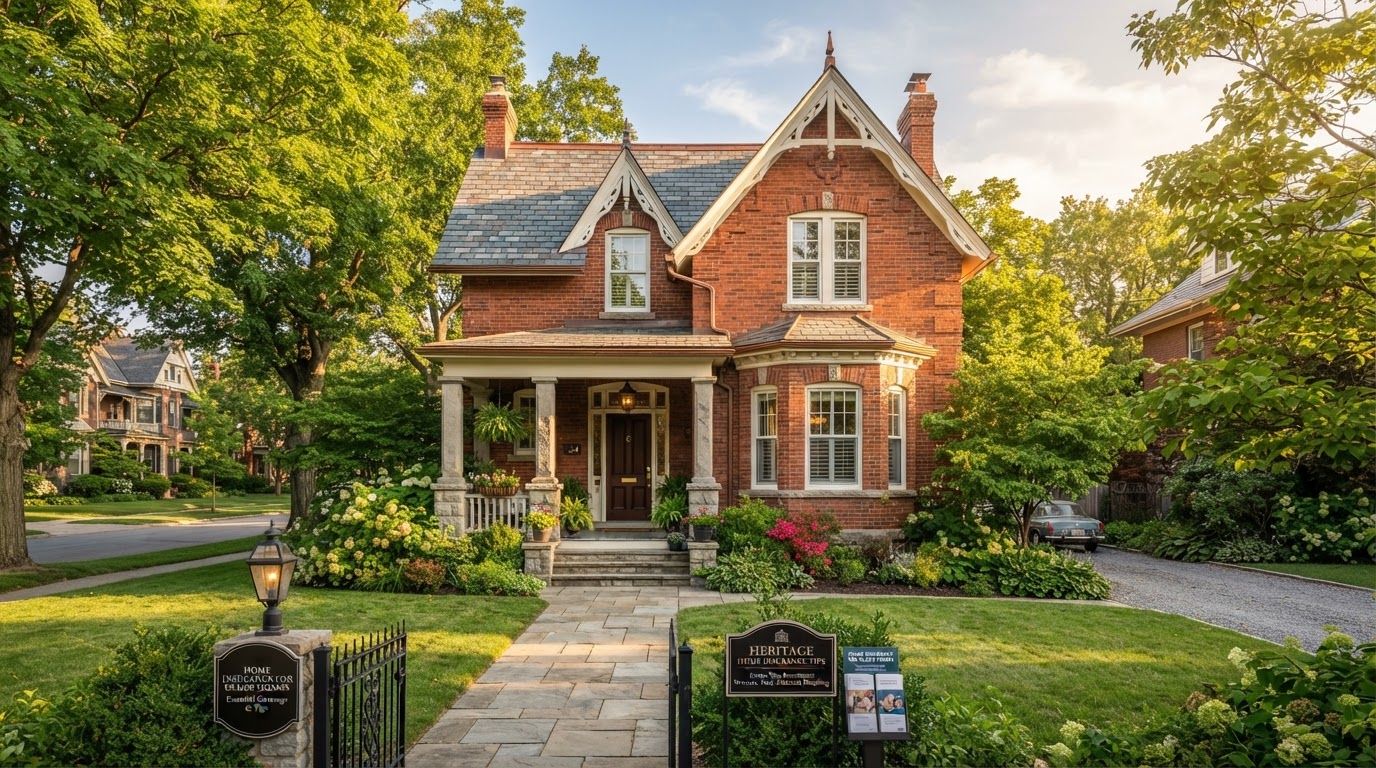
Older homes in Illinois have character, charm, and history that new construction simply can't match. From beautiful woodwork to stained glass windows to solid plaster walls, these homes are treasures. But they also come with unique insurance challenges. From outdated wiring to aging roofs to plumbing that's past its prime, insuring an older home requires special consideration. In this comprehensive guide, we'll share the best tips for properly protecting your older Illinois home.
Insure for Replacement Cost, Not Market Value
Older homes may have lower market values but higher rebuilding costs. Custom woodwork, plaster walls, and historic details are expensive to replicate. Make sure your dwelling coverage reflects the true cost to rebuild with similar materials, not what the home would sell for. A $200,000 home with custom millwork and original hardwood floors might cost $350,000 to rebuild after a fire.
Many older homes have features that are no longer standard in modern construction: solid wood doors, plaster walls, built-in cabinetry, leaded glass windows, hardwood floors with intricate inlays. Replacing these features requires skilled craftsmen and specialized materials, both of which are expensive. Standard replacement cost estimators may not account for these unique features, so it's important to work with an agent who understands the true cost of rebuilding an older home.
Consider Ordinance or Law Coverage
If your older home is damaged, you may be required to rebuild it to current building codes, not the codes that existed when it was originally built. This can significantly increase rebuilding costs. For example, you might need to upgrade electrical wiring, install fire sprinklers, or add handicap accessibility features that weren't required when the home was built. Ordinance or law coverage pays for the increased cost of meeting current codes.
Without this coverage, you'd have to pay the difference out of pocket. For a significantly older home, the cost of code upgrades can add 25-50% to the rebuilding cost. Ordinance or law coverage is typically inexpensive and is essential for older homes. There are typically three components: coverage for the undamaged portion that must be demolished, coverage for the cost to upgrade the damaged portion to current code, and coverage for the cost to bring the undamaged portion up to code.
Update Your Systems
- Electrical: Update knob-and-tube or aluminum wiring to reduce fire risk and qualify for better rates. Many carriers refuse to insure homes with knob-and-tube wiring
- Plumbing: Replace galvanized pipes to prevent leaks and water damage. Polybutylene pipes, common in homes built from 1978-1995, are also a concern
- HVAC: Modern heating systems are safer and more efficient. Older furnaces may be flagged by carriers as fire risks
- Roof: A new roof can significantly reduce your premium and eliminate wind/hail surcharges. Many carriers require roof replacement after 20-25 years
Updating these systems not only improves your insurance options and rates but also makes your home safer and more comfortable. Some carriers offer discounts for updated systems, and others simply won't insure homes with certain outdated features. If you're planning to update, let us know—we can help you understand which updates will have the biggest impact on your insurance costs and coverage options.
Roof Age Matters
In Illinois, roof age is a major factor in home insurance pricing. Many carriers require roof inspection or impose surcharges for roofs over 15-20 years old. If your roof is aging, replacing it can reduce your premium and improve your coverage options. Some carriers won't write new policies for homes with roofs over 20 years old, and others require actual cash value (depreciated) coverage for older roofs.
Illinois weather is particularly hard on roofs. Hailstorms, high winds, and ice dams all take a toll. If your roof has missing or damaged shingles, water stains on the underside, or granules in your gutters, it may be time for replacement. A new roof not only improves your insurance situation but also protects your home from water damage, which is one of the most common and costly claims.
Water Backup Coverage Is Essential
Older homes in Illinois are particularly susceptible to sewer and drain backup issues. Aging pipes, tree root intrusion, and outdated municipal infrastructure make water backup a common and costly problem. Standard homeowners policies typically exclude sewer backup damage, which can cost tens of thousands of dollars to remediate. Add water backup coverage to your policy.
The cost of water backup coverage is typically $30-$150 per year, depending on the coverage limit. Given that a single sewer backup in a finished basement can cause $10,000-$50,000 in damage, this is one of the most important endorsements for older Illinois homes. We recommend at least $10,000 in coverage, and $25,000 or more for homes with finished basements.
Schedule High-Value Items
Older homes often contain antiques, heirlooms, or custom features that exceed standard personal property limits. Standard policies have sub-limits for certain categories: jewelry may be capped at $1,500, art at $5,000, and collectibles at $2,500. If your older home contains valuable items, schedule them separately to ensure they're fully covered at their appraised value.
Scheduled coverage, also called a personal articles floater, lists specific items with their appraised value. This provides broader coverage than standard personal property coverage, often including mysterious disappearance and worldwide protection. The cost is typically modest—$100-$300 per year for $20,000 in scheduled items—and the protection is significantly better.
Document Your Home's Features
Take photos and keep records of your home's unique features—original woodwork, stained glass, built-in cabinetry, custom tile work, and other distinctive elements. This documentation is invaluable if you need to file a claim and prove the value of what was lost. Create a home inventory that includes photos, descriptions, and approximate values of all significant features and belongings.
Store this documentation safely—both physically and digitally. Cloud storage ensures your records survive even if your home is destroyed. Update the inventory annually, especially after making improvements or acquiring new belongings. This documentation not only helps with insurance claims but also provides a record for estate planning and home sale purposes.
Work With an Independent Agent
Not all carriers are willing to insure older homes, and those that do may charge significantly different rates. Some carriers specialize in older and historic homes, offering better rates and more appropriate coverage. Others have strict requirements that may make coverage difficult or expensive to obtain. As an independent agency, we compare options from 15+ carriers to find the one that best understands and values your older home.
We understand the unique challenges of insuring older homes in Illinois. We know which carriers are most accommodating, which offer the best rates, and which provide the most appropriate coverage. We also help you identify and address coverage gaps, recommend endorsements, and ensure your policy truly protects your home's unique features and value.
Consider Extended Replacement Cost
For older homes, the cost to rebuild can be difficult to estimate accurately. Custom features, specialized materials, and skilled labor can all push rebuilding costs above standard estimates. Extended replacement cost coverage pays up to 125% or 150% of your dwelling limit if rebuilding costs exceed your policy limit. This provides a valuable buffer for older homes where rebuilding costs are uncertain.
Review Your Coverage Annually
Your home's value, rebuilding costs, and coverage needs change over time. An annual review ensures your coverage keeps pace. We review your dwelling limit, personal property coverage, liability limits, and endorsements each year. If you've made improvements, acquired new belongings, or if construction costs have increased in your area, we adjust your coverage accordingly.
For older homes, an annual review is particularly important because the home's condition changes over time. A roof that was acceptable last year may need replacement this year. Plumbing that was fine may start showing signs of wear. By reviewing annually, we can identify potential issues before they become claims and adjust your coverage as needed.
The Bottom Line
Insuring an older home in Illinois requires special attention to ensure you're properly protected. By insuring for replacement cost, adding ordinance or law coverage, updating your systems, adding water backup coverage, scheduling high-value items, and working with an independent agent who understands older homes, you can build a policy that truly protects your home's unique character and value. Don't settle for a standard policy that may not account for your home's special features—get coverage designed for your home.
Frequently Asked Questions
Is it harder to insure an older home in Illinois?
It can be. Some carriers have restrictions on homes over a certain age or with outdated systems. However, many carriers specialize in older homes. We help you find the right match from 15+ carriers.
Will updating my electrical system lower my insurance?
Yes. Updating outdated electrical systems reduces fire risk and can qualify you for better rates with more carriers. We can help you understand the potential savings before you make updates.
What is ordinance or law coverage and why do I need it?
If your older home is damaged, you may be required to rebuild to current building codes, which can be more expensive than the original construction. Ordinance or law coverage pays for the increased cost of meeting current codes.