
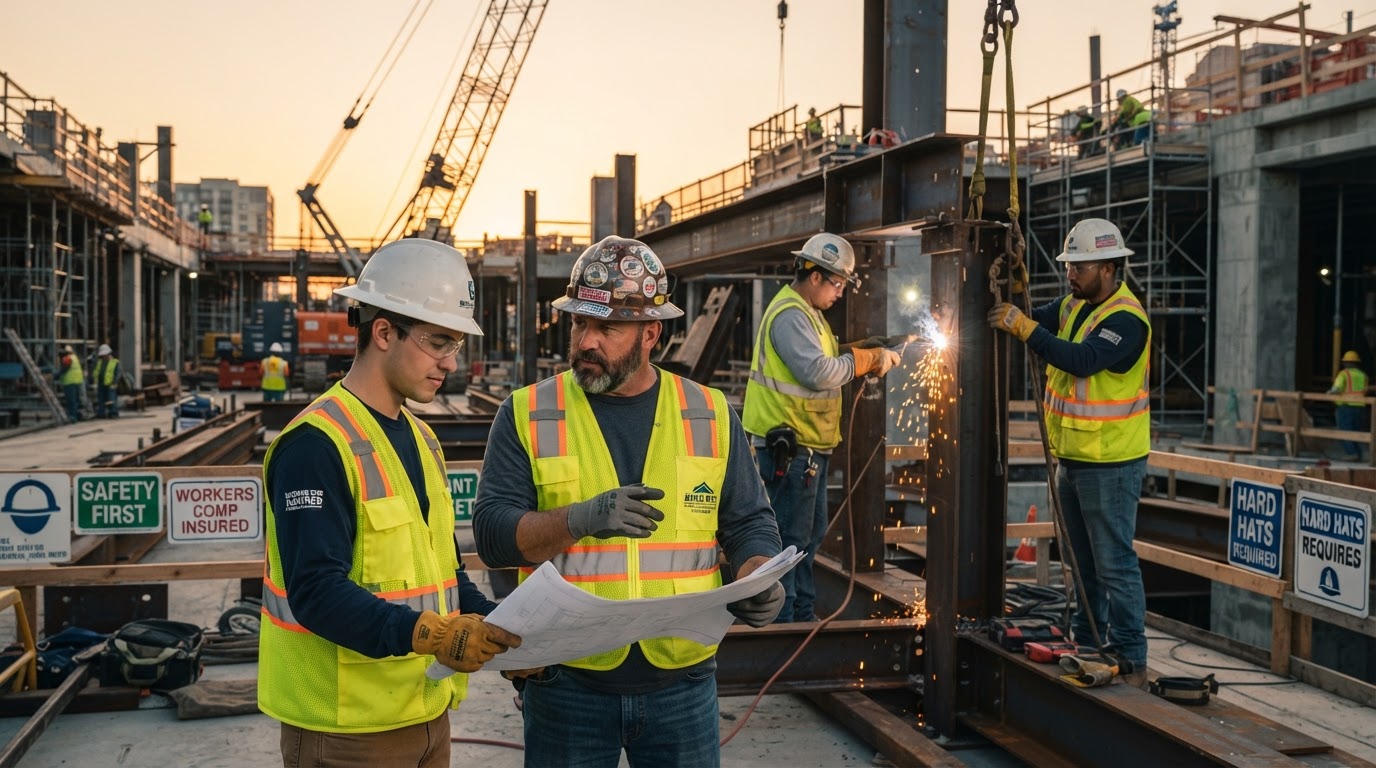
Workers' Compensation Insurance for Illinois Businesses.
In Illinois, workers' compensation isn't optional. The Insurance Professionals helps business owners secure compliant, affordable coverage that protects your team and your business.
No obligation • Personalized recommendations • Fast response
What Workers' Comp Covers
Workers' compensation protects both your employees and your business. It covers medical costs and lost wages for workplace injuries while shielding your business from direct lawsuits.
Medical Expenses
Covers doctor visits, hospital stays, surgeries, and rehabilitation for work-related injuries.
Lost Wages
Replaces a portion of income for employees unable to work due to a workplace injury.
Disability Benefits
Provides compensation for temporary or permanent disabilities resulting from a workplace injury.
Death Benefits
Provides financial support to dependents if an employee dies from a work-related injury.
Legal Protection
Protects your business from being sued by injured employees for workplace accidents.
Rehabilitation
Covers vocational rehabilitation to help injured employees return to work.
Common Workers' Comp Mistakes
Not Carrying Coverage
Illinois requires workers' comp for nearly all employers. Operating without it risks fines and criminal penalties.
Misclassifying Employees
Incorrect job classifications can lead to overpaying or underpaying premiums. We help classify correctly.
Ignoring Experience Mod
Your experience modification rate impacts your premium. A good safety program can lower it over time.
Not Reporting Claims Promptly
Delayed reporting can increase costs and lead to denied claims. Report injuries immediately.
Skipping Safety Programs
A strong safety culture reduces claims and lowers premiums over time.
Not Reviewing Annually
Payroll changes and classification updates should be reviewed yearly to ensure accurate coverage.
How to Lower Your Workers' Comp Premium in Illinois
Workers' compensation is a significant cost for Illinois employers. Here are proven strategies to reduce your premium while maintaining compliant, comprehensive coverage for your team.
Implement Safety Programs
Documented workplace safety training, hazard assessments, and injury prevention protocols reduce claims and lower your experience modification rate over time.
Classify Employees Correctly
Misclassifying employees can lead to overpaying or underpaying premiums. We help ensure your job classifications are accurate and compliant with Illinois requirements.
Report Claims Promptly
Delayed claim reporting increases costs and can lead to denied claims. Report workplace injuries immediately to control medical costs and reduce claim severity.
Use a Return-to-Work Program
Bringing injured employees back to modified duty as soon as medically appropriate reduces lost wage costs and shortens claim duration.
Audit Your Payroll Annually
Overestimating payroll means overpaying premiums; underestimating risks audit penalties. We help you project payroll accurately for your policy period.
Work With an Independent Agent
We shop multiple workers' comp carriers simultaneously, comparing rates and programs. This competitive approach often finds better value than renewing with the same carrier.
What Affects Your Workers' Comp Rate in Illinois
Workers' compensation premiums are calculated based on several key factors. Understanding what drives your rate helps you make informed decisions about your coverage.
Total Payroll
Your premium is calculated as payroll multiplied by a classification rate. Higher payroll means higher premiums. Accurate payroll projection is essential.
Job Classifications
Each job type has a specific rate based on risk. Office workers have low rates; construction and manufacturing have high rates. Correct classification is critical.
Experience Mod (EMR)
Your EMR reflects your claims history vs. industry average. Below 1.0 means fewer claims (lower premiums); above 1.0 means more claims (higher premiums).
State Regulations
Illinois sets its own workers' comp requirements and benefit levels. Illinois is generally a higher-cost state for workers' comp compared to some neighboring states.
Claims History
Your claims frequency and severity directly impact your EMR and premium. Fewer and less severe claims lead to lower rates over time.
Carrier & Program
Different carriers offer different base rates and programs. We compare multiple carriers to find the most competitive option for your classifications.
Illinois Workers' Comp Considerations
Illinois has specific workers' compensation laws and requirements that business owners must understand. Here's what Illinois employers should know about their coverage.
Mandatory Coverage
Illinois requires workers' compensation for nearly all employers with at least one employee. There are very few exemptions. Operating without coverage can result in criminal penalties, daily fines, and personal liability for the business owner.
Illinois Workers' Compensation Commission
The Illinois Workers' Compensation Commission (IWCC) administers claims and disputes. Illinois is generally considered a worker-friendly state, which can affect claim costs and premiums. We help you navigate these requirements.
Experience Modification Rate
Your EMR is calculated by the National Council on Compensation Insurance (NCCI) based on your claims history. A strong safety program can lower your EMR over time, resulting in significant premium savings.
Independent Contractor Rules
Illinois has strict tests for who qualifies as an independent contractor. Misclassifying employees as contractors to avoid workers' comp can result in severe penalties. We help you understand your classification obligations.
Premium Audits
Workers' comp policies are audited annually to reconcile estimated payroll with actual payroll. Underestimating payroll can result in a large audit bill. We help you project payroll accurately to avoid surprises.
Common Workers' Comp Questions
Is workers' compensation required in Illinois?
Yes. Illinois law requires nearly all employers to carry workers' compensation insurance, even if you have only one employee. Failure to comply can result in significant fines and penalties.
What does workers' compensation cover?
Workers' comp covers medical expenses, lost wages, rehabilitation costs, and death benefits for employees injured on the job. It also protects employers from being sued by injured employees.
How are workers' comp premiums calculated?
Premiums are based on your payroll, the type of work employees perform (classified by risk), and your claims history (experience modification rate). We help you find the most competitive rates.
Can I bundle workers' comp with other business insurance?
While workers' comp is often a standalone policy, many carriers offer multi-policy discounts when you combine it with general liability, commercial property, or a BOP. We help you explore all options.
What is an experience modification rate (EMR)?
Your EMR is a number that reflects your claims history compared to industry averages. A rate below 1.0 means fewer claims than average (lower premiums); above 1.0 means more claims (higher premiums). Safety programs can lower your EMR over time.
Do I need workers' comp for independent contractors?
Generally no, but Illinois has strict tests for who qualifies as an independent contractor vs. employee. Misclassifying employees as contractors can result in penalties. We help you understand your obligations.
What happens if I don't carry workers' comp in Illinois?
Operating without workers' comp in Illinois can result in criminal penalties, daily fines, personal liability for the business owner, and prohibition from bidding on public contracts. It's a serious violation.
How much does workers' comp cost in Illinois?
Costs are based on your total payroll multiplied by a rate for each job classification. Office workers cost less than construction workers. We compare multiple carriers to find the best rate for your specific classifications.
Workers' Comp Quote Process
Share Details
Tell us about your business
Review Classifications
We classify your employees
Compare Options
We shop multiple carriers
Choose Coverage
Protect your team
Protect Your Team and Your Business.
No obligation • Personalized recommendations • Fast response