
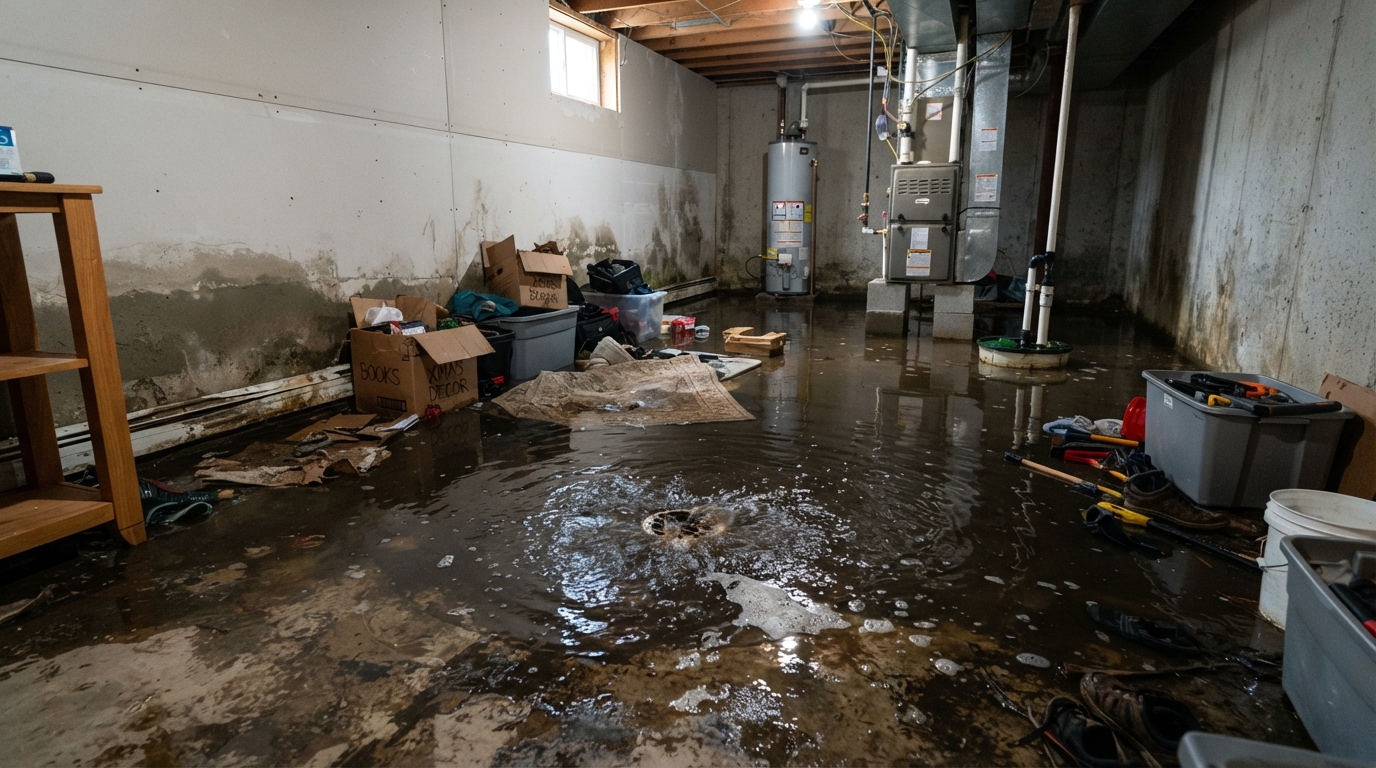
Sewer backup is one of the most frequent and expensive home insurance claims in Illinois. A single backup can cause thousands of dollars in damage to your home and belongings, not to mention the health risks associated with contaminated water. Yet many homeowners are surprised to learn that their standard insurance policy may not cover this common peril. In this guide, we'll explain exactly what sewer backup is, why it's typically excluded from standard policies, and how you can protect your home with the right coverage.
What Causes Sewer Backup?
Sewer backup occurs when water flows backward through your drains, toilets, or sinks instead of flowing out to the sewer line. This can happen for several reasons, and understanding the cause is important because it affects whether your insurance will cover the damage.
Common causes include heavy rainfall that overwhelms the municipal sewer system, tree roots that grow into and block sewer lines, aging or collapsed pipes, clogs from grease or debris, and sump pump failure during storms. In Illinois, where many homes are older and the infrastructure is aging, sewer backup is particularly common during heavy spring and summer storms.
The Short Answer: Usually No
Standard homeowners insurance policies typically exclude sewer backup damage. This means if water backs up through your drains or toilets and damages your home, you may be on your own to pay for the repairs—unless you have the right endorsement. This exclusion exists because sewer backup is considered a maintenance-related issue or a result of municipal system failure, rather than a sudden, accidental peril like fire or wind.
Many homeowners discover this exclusion only after a backup occurs, which is the worst time to learn about it. A typical sewer backup can cause $10,000 to $50,000 in damage, depending on the extent of the water, the level of contamination, and how much of the home is affected. Without coverage, these costs come entirely out of pocket.
Water Backup Coverage Endorsement
The good news is that most insurance carriers offer a water backup and sump pump overflow endorsement that can be added to your policy. This coverage is relatively inexpensive—typically between $30 and $150 per year depending on your coverage limit and location—and can save you thousands if a backup occurs. If you live in Illinois, particularly in an older home or an area with aging infrastructure, this endorsement is one of the most important additions you can make to your policy.
What Water Backup Coverage Includes
- Damage to your home's structure from backed-up water, including floors, walls, and built-in fixtures
- Damage to personal belongings from sewer backup, including furniture, electronics, and clothing
- Costs for water extraction, cleanup, and sanitation after a backup event
- Damage from sump pump failure or overflow, which is common during Illinois storms
- Costs for mold remediation if mold develops as a result of the water damage
- Additional living expenses if your home is uninhabitable during repairs
What Water Backup Coverage Typically Doesn't Cover
- Flooding from outside water entering your home through windows, doors, or foundation cracks—you need separate flood insurance for this
- Damage from groundwater seepage through foundation walls, which is considered a maintenance issue
- Repair or replacement of the actual sewer line on your property—service line coverage can help with this
- Damage caused by your own negligence, such as flushing inappropriate items down the toilet
- Gradual damage that occurs over time rather than from a sudden backup event
How Much Coverage Do You Need?
Water backup coverage limits typically range from $5,000 to $25,000. Given the cost of cleanup, repairs, and replacing damaged belongings, we recommend at least $10,000 in coverage for most Illinois homes. For larger homes or homes with finished basements, $25,000 or more may be appropriate. The cost difference between a $5,000 limit and a $25,000 limit is typically only $30-$60 per year, making the higher limit an excellent value.
Consider what's at stake: if your finished basement floods with contaminated water, you may need to replace carpeting, drywall, insulation, furniture, electronics, and personal belongings. You'll also need professional water extraction and sanitation services. The total cost can easily exceed $25,000 for a serious backup in a finished basement.
Sewer Backup vs. Flood Damage: What's the Difference?
Many homeowners confuse sewer backup with flood damage, but they are different perils that require different coverage. Sewer backup is water that comes up through your drains, toilets, or sump pump—it originates from inside your home's plumbing system. Flood damage is water that enters your home from outside—through windows, doors, seepage through walls, or surface water accumulation.
Your water backup endorsement covers sewer backup but not flooding. Conversely, a flood insurance policy covers flooding but not sewer backup—unless the flooding causes the sewer to back up. This distinction is important because many Illinois homeowners assume one policy covers both situations. If you live in an area prone to both heavy rain (which can cause sewer backup) and potential flooding, you may need both coverages.
Service Line Coverage: Another Important Protection
The sewer line that runs from your home to the municipal main is your responsibility as a homeowner. If this line cracks, collapses, or is damaged by tree roots, the repair costs can be significant—often $3,000 to $10,000 or more. Standard homeowners insurance doesn't cover this, but service line coverage is an inexpensive endorsement that pays to repair or replace damaged underground utility lines on your property.
In Illinois, where many homes are 50+ years old with original clay or cast iron sewer lines, service line coverage is particularly valuable. Tree roots are a common problem in older neighborhoods, and a collapsed sewer line can be a major expense. Service line coverage typically costs $30-$50 per year and covers water, sewer, and electrical lines.
Prevention Tips for Illinois Homeowners
- Install a backwater valve: This one-way valve prevents water from flowing back into your home and is one of the most effective prevention measures
- Maintain your sump pump: Test it regularly, install a battery backup system, and consider a secondary pump for added protection
- Avoid pouring grease down drains: Grease solidifies in pipes and is a leading cause of blockages
- Have your sewer line inspected periodically: Especially in older homes where tree roots and aging pipes are common
- Don't plant trees near sewer lines: Tree roots naturally seek water sources and can infiltrate and damage underground pipes
- Dispose of paper products properly: Only flush toilet paper—paper towels, wipes, and feminine products can cause blockages
- Consider a floor drain alarm: This early warning system alerts you when water begins to back up, allowing faster response
What to Do If You Experience Sewer Backup
If you experience a sewer backup, take immediate action to minimize damage. First, stop using all plumbing fixtures to prevent additional water from entering. Second, contact a professional water damage restoration company to begin extraction and cleanup—speed is critical to prevent mold growth and structural damage. Third, contact your insurance advisor to report the claim and understand your coverage. Document the damage with photos and videos before any cleanup begins.
Do not attempt to clean up sewage-contaminated water yourself. Sewage contains harmful bacteria, viruses, and parasites that can cause serious illness. Professional restoration companies have the equipment and training to safely remove contaminated water, sanitize affected areas, and prevent mold growth.
How We Help Illinois Homeowners
As an independent insurance agency, we review your current policy to identify whether you have water backup coverage and whether your limits are adequate. If you don't have this coverage, we add it. If your limits are too low, we increase them. We also review your overall policy for other common gaps, compare options from 15+ carriers, and ensure your home is properly protected against the risks most likely to affect Illinois homeowners.
Don't wait until a backup occurs to discover you're not covered. A simple policy review can identify this and other gaps before they become costly problems. Contact us today for a no-obligation review of your current homeowners insurance.
Frequently Asked Questions
Is sewer backup the same as flood damage?
No. Sewer backup is water coming up through your drains and plumbing. Flooding is water entering from outside through windows, doors, or seepage. They require different coverage—water backup endorsement vs. flood insurance.
How much does water backup coverage cost?
Water backup endorsement is typically very affordable, often between $30 and $150 per year depending on your coverage limit and location. Increasing from $5,000 to $25,000 in coverage often costs only $30-$60 more per year.
Does water backup coverage cover my sump pump failure?
Yes. Most water backup endorsements include sump pump overflow or failure coverage. This is important for Illinois homeowners with finished basements, as sump pump failure during storms is a common cause of water damage.